Choosing the Right Texture & Finish for Your Walls (Without Regretting It Later)
Painting can feel like a fresh start. You replace the old colors with entirely new ones, hoping the room will transform. Sometimes it does. Other times, something still feels off, subtly unfinished, even though you can’t quite put your finger on what it is.
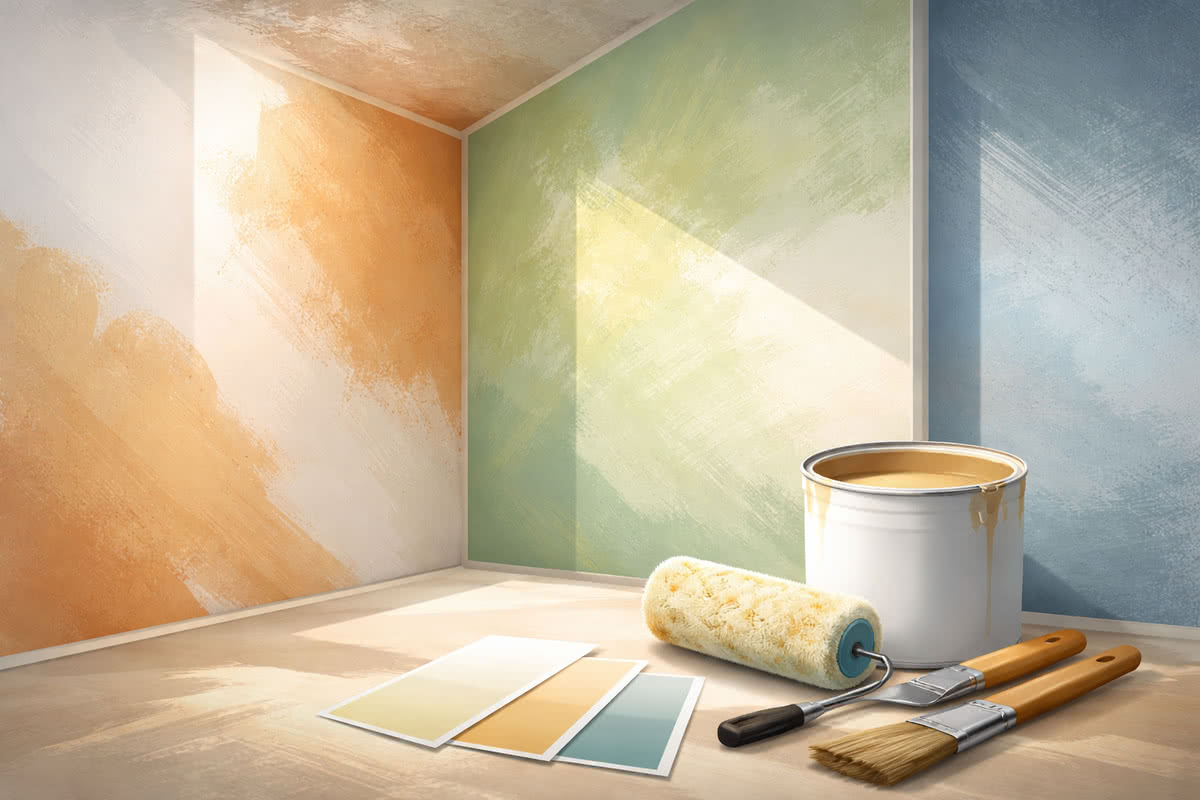
In many cases, the problem isn’t the paint itself. It’s the wall.
When people talk about wanting perfect walls, they usually hint at an unspoken wish for a space that feels cleaner, calmer, and more cohesive. Achieving that feeling often comes down to two key choices made long before the paint dries: texture and finish.
These choices set the stage for everything that follows: how smooth your walls look and how they interact with light, which can change the room’s entire atmosphere.
But before diving into these decisions, there’s a more fundamental place to start.
Look at the Room the Way Paint Will See It
Stand in the room at different times of the day and really pay attention to how the light changes.
In the morning, the sunlight might hit the walls at an angle, highlighting every little imperfection. Then, in the afternoon or at night when the lights are on, you might notice how different shadows can make bumps and patches seem more pronounced. It’s interesting how a wall that seems perfectly fine in the evening can look wavy at 10 a.m.
Now, look closely at the surface itself. Not the color, the surface. Can you spot any old repairs? Are there slight ridges or spots that seem smoother or rougher than the rest?
Finally, think about distance. A long hallway wall that you walk past up close needs different treatment than a living room wall you mostly see from across the room.
So, remember: light, surface, and distance are the three key factors that will influence what looks good and what might not.
Texture Is About Forgiveness, Not Just Decoration
We often think of texture as a stylistic choice, but in most homes, it also serves a practical purpose.
A completely smooth wall can be unforgiving, as it puts everything on display: shallow patches, subtle dips, and seams that weren’t properly hidden. In rooms with strong daylight, those issues become even more noticeable.
This is why light textures exist and why they’re widely used, even in well-finished homes. A subtle texture softens transitions, breaking reflections just enough so your eye perceives the wall as a continuous surface rather than a collection of pieces.
Think about it this way: texture adds character, but most importantly, it minimizes distractions. When done right, you hardly notice it at all.
In older homes or rooms with long walls and plenty of natural light, a restrained texture provides a sense of completion without constantly drawing your attention.
Finish Is a Decision About Honesty and Maintenance
The paint finish you choose can greatly affect how honest your wall looks and how much upkeep you’re committing to.
High-sheen paints reflect more light, making them durable and easier to clean. However, they also highlight any imperfection beneath the surface. On a wall that’s been meticulously prepared, this finish can look sharp and polished. But on walls with minor flaws, the results can feel too revealing.
On the opposite end, flat finishes beautifully conceal surface issues, but they don’t love fingerprints, scuffs, or repeated cleaning. While this trade-off might work well in low-traffic areas, it’s often less practical in busy living spaces.
This is why most homes end up with finishes that strike a balance. A soft sheen holds up to daily life while minimizing imperfections. While it may not be the most exciting choice, that’s intentional: walls are primarily meant to support everything else in your space, rather than take center stage themselves.
A Few Situations That Come Up Again and Again
When choosing the right texture and finish for your walls, you don’t need to follow strict rules. Instead, focus on recognizing patterns that suit your space.
If your walls have small flaws you’ve learned to overlook, opt for a finish that won’t accentuate them.
If a room receives strong daylight, especially across long walls, prioritize forgiving finishes over sharp, high-contrast options.
If you value low maintenance, steer clear of extremes such as dead-flat or high-gloss finishes.
Lastly, if you’re repainting to “fix” a wall that already bothers you, take a moment to reconsider. Paint rarely resolves a surface issue. More often, it highlights them.
Why Surface Prep Prevents Regret
Paint is often the last step in a project, which is why it tends to get the most attention. In contrast, texture and surface preparation occur earlier in the process and usually go unnoticed. However, those early decisions set the limits of what paint can realistically do.
When the surface and finish are in harmony with the realities of the space, the walls fade into the background, enhancing the overall aesthetic. This creates an environment where light is evenly distributed, colors are more intentional, and rooms feel cohesive.
In sum, the foundation set by texture and finish is key to achieving an inviting space that finally feels right.