What options are available for investigative case management software?
Popular investigative case management software options include IBM i2, NICE Actimize, Resolver, CaseGuard, Salesforce Case Management, OpenText Investigations, and Palantir Gotham. These platforms help organizations manage investigations, track evidence, automate workflows, and improve collaboration across teams.
Each solution offers different strengths, ranging from financial crime detection and intelligence analysis to digital evidence management and enterprise investigation workflows. In the following sections, we will examine the key features and capabilities of each platform in more detail.
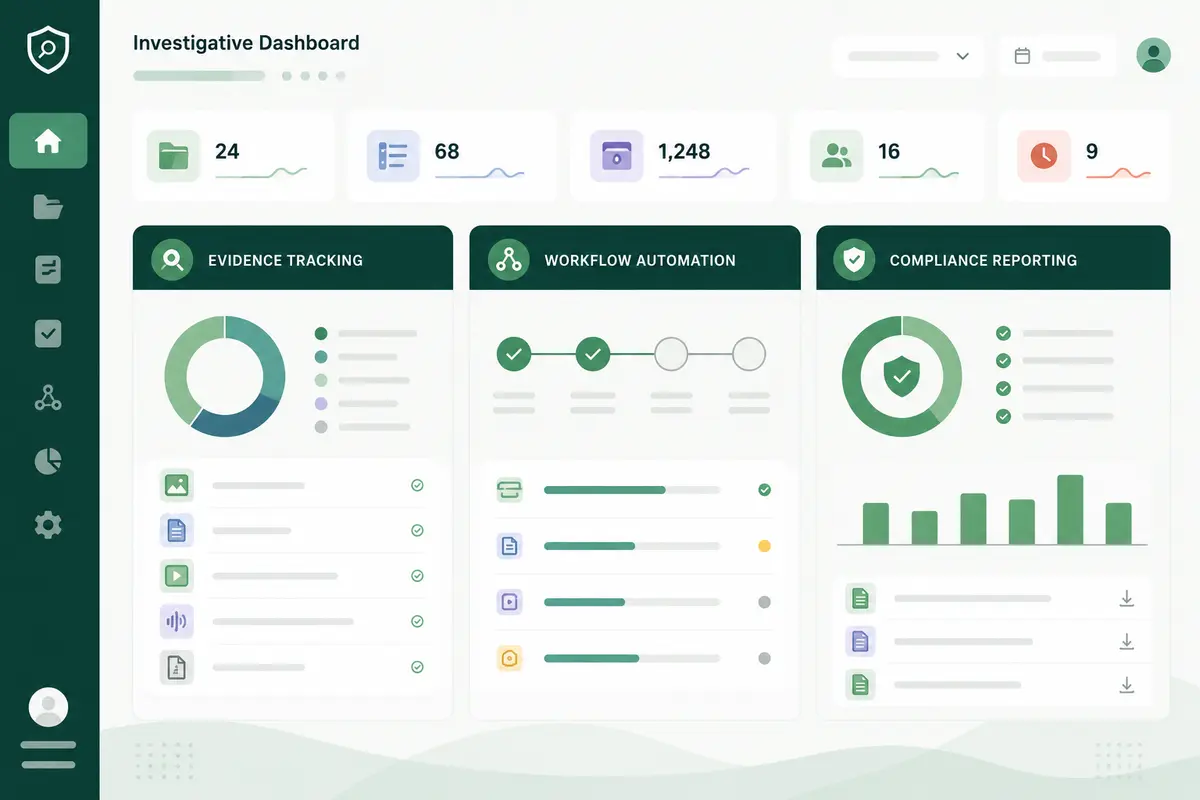
Top investigative case management software options
Investigative case management software helps organizations streamline investigations, manage evidence, track cases, and improve collaboration across teams. These platforms are commonly used by law enforcement agencies, financial institutions, compliance teams, and enterprise security departments to increase efficiency, maintain audit trails, and support complex investigative workflows.
Below are some of the leading investigative case management software platforms and their core capabilities.
1. IBM i2
IBM i2 is widely recognized for its advanced intelligence analysis and powerful link analysis capabilities. The platform helps investigators identify patterns, relationships, and hidden connections within large datasets through advanced visualization tools. It is commonly used by law enforcement, intelligence agencies, and organizations handling complex investigations that require deep analytical capabilities.
2. NICE Actimize
NICE Actimize specializes in financial crime investigations and compliance monitoring. The platform uses AI-powered analytics and transaction monitoring tools to detect fraud, money laundering, and suspicious activities in real time. Financial institutions often rely on NICE Actimize to strengthen compliance programs and reduce investigation times.
3. Resolver
Resolver focuses on enterprise incident and investigation management by combining workflow automation with centralized case tracking. The platform helps organizations standardize investigative processes, improve reporting, and maintain clear audit trails. Its flexibility makes it suitable for corporate security, risk management, and compliance teams.
4. CaseGuard
CaseGuard is known for its digital evidence management and AI-assisted redaction capabilities. The platform simplifies the handling of audio, video, and document evidence while automating sensitive information redaction. Organizations dealing with legal evidence, compliance, or public records requests benefit from its efficient evidence processing features.
5. Salesforce Case Management
Salesforce Case Management offers highly customizable workflows and enterprise scalability for organizations that need flexible investigation management solutions. Businesses can adapt workflows, automate tasks, and integrate the platform with existing enterprise systems to support a wide variety of investigative and customer-related cases.
6. OpenText Investigations
OpenText Investigations is designed for compliance-heavy environments that require strong document and records management capabilities. The platform helps organizations manage investigations while maintaining regulatory compliance, secure recordkeeping, and detailed audit documentation.
7. Palantir Gotham
Palantir Gotham is widely used by government agencies and intelligence organizations for large-scale data integration and advanced investigative analytics. The platform enables investigators to combine multiple data sources, analyze complex relationships, and improve situational awareness during investigations and intelligence operations.
Organizations evaluating investigative case management software should carefully compare features, scalability, and integration capabilities to ensure the platform aligns with their operational and compliance requirements.
Comparison of popular investigative case management software
| Software | Best For | Key Strength |
|---|---|---|
| IBM i2 | Intelligence investigations | Data visualization |
| NICE Actimize | Financial crime | Fraud analytics |
| Resolver | Enterprise investigations | Workflow management |
| CaseGuard | Evidence handling | AI redaction |
| Salesforce | Large enterprises | Customization |
| OpenText | Compliance teams | Document management |
| Palantir Gotham | Government agencies | Big data integration |
Key features to look for in investigative case management software
When selecting an investigation platform, organizations should evaluate features that improve efficiency, security, and collaboration.
- Centralized case tracking: Keeps all investigation details and activities in one system.
- Evidence and document management: Securely stores and organizes investigation files and digital evidence.
- Workflow automation: Automates repetitive tasks and approval processes to improve efficiency.
- Role-based permissions: Restricts access based on user roles to improve security and compliance.
- Audit trails and reporting: Tracks user activity and generates detailed compliance reports.
- AI and analytics tools: Helps identify patterns, risks, and trends within investigation data.
- Mobile accessibility: Enables investigators to access cases and updates remotely.
- Cloud and on-premise deployment options: Supports different security and infrastructure requirements.
- Integration with third-party systems: Connects with CRMs, databases, ERPs, and evidence platforms.
Frequently asked questions (FAQs)
What is investigative case management software used for? It helps organizations manage investigations, track cases, store evidence, automate workflows, and maintain compliance records.
Which industries use investigative case management software? Industries include law enforcement, financial services, healthcare, legal services, government, and corporate security.
What features are most important in investigation software? Key features include case tracking, evidence management, workflow automation, audit trails, analytics, and secure access controls.
What is the best investigative case management software for law enforcement? Popular options include IBM i2, Palantir Gotham, and other platforms designed for intelligence analysis and criminal investigations.
Is investigative case management software cloud-based? Many providers offer cloud, hybrid, and on-premise deployment models depending on organizational security requirements.
Can investigative case management software integrate with existing systems? Yes, most enterprise platforms support integrations with databases, CRMs, ERPs, and digital evidence systems.
How much does investigative case management software cost? Pricing varies widely depending on features, deployment type, customization, and organization size.
How does AI improve investigative workflows? AI can automate repetitive tasks, identify patterns in large datasets, accelerate evidence review, and improve decision-making.
Conclusion
Modern investigative case management software helps organizations manage investigations more efficiently through better collaboration, workflow automation, evidence tracking, and compliance management. These platforms are widely used in industries such as law enforcement, healthcare, finance, and enterprise security to improve investigation processes and reduce operational risks.
Choosing the right solution depends on factors such as scalability, security, integrations, and industry needs. As investigations become more complex, technologies like AI, automation, and real-time analytics are playing an increasingly important role in helping organizations make faster and smarter decisions.
Comments
Comments are loaded when you choose to open them, which keeps the page faster and lighter.