How Open-Source Technologies Enable File Conversion
Open-source software plays a key role in today’s digital world. It runs operating systems, websites, and many of the tools people use every day. One area where it makes a real difference is file conversion.
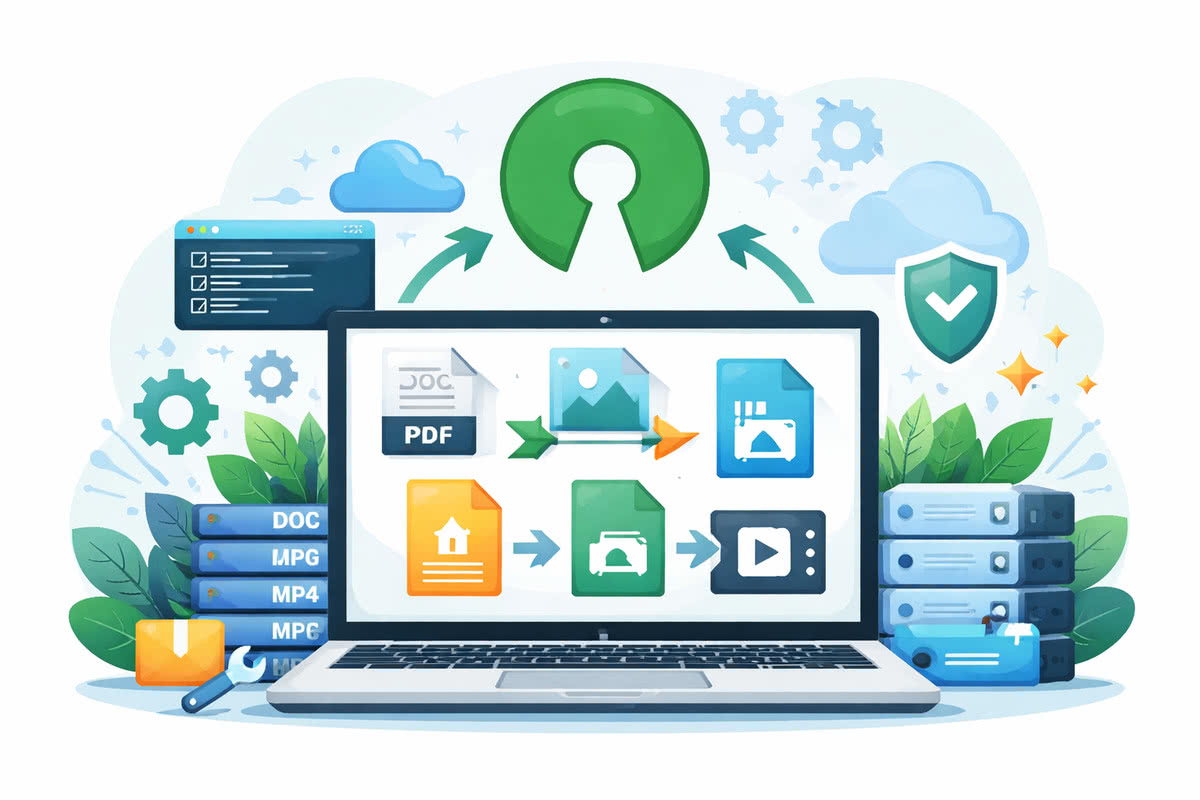
People often need to convert documents, images, audio, and video files. Open-source tools make this task easier. They give users control, flexibility, and long-term access without forcing them into closed platforms.
Why Open-Source Matters
Open-source software offers clear benefits:
- Code that anyone can review
- Development driven by the community
- No vendor lock-in
- Long-term support
- Strong options for customization
These features help developers and technical users build systems that are secure, stable, and based on open standards.
Popular Open-Source File Conversion Technologies
Many trusted file conversion tools are built on open-source projects:
- FFmpeg – media conversion for video and audio
- ImageMagick – image processing and format conversion
- LibreOffice – document conversion (DOCX, PDF, ODT, etc.)
- Pandoc – text and markup format conversion
- Ghostscript – PDF and PostScript processing
These tools run on servers, cloud systems, and automated workflows across the web.
How Open-Source Powers Online File Converters
Many online conversion services use open-source tools in the background. Instead of building everything from scratch, they rely on proven software that already works well.
For example, media converters often use FFmpeg for video tasks. Document converters often use LibreOffice or Pandoc to change file formats.
This approach gives users:
- Support for open formats
- Consistent output quality
- Faster updates
- Wide compatibility
Open-Source and User-Friendly Platforms
Command-line tools offer power and control, but not everyone wants to use them. Many users prefer simple web tools that work in a browser.
Some platforms combine open-source engines with clean interfaces. A good example is a file converter like FastConvert. It uses trusted open-source tools while giving users a clear and simple way to convert files.
Users upload a file, choose a format, and download the result. There is no need to install software or manage settings.
Security and Ethical Use
Open-source software supports strong security practices. Since the code is public, experts can review it and fix issues faster.
Platforms that rely on open-source tools often follow clear ethical standards:
- No hidden data collection
- Secure file handling
- Clear privacy policies
- No support for harmful or misleading content
These values match the core goals of open-source development.
Conclusion
Open-source software forms the base of modern file conversion. It offers reliable tools for working with documents, images, audio, and video.
By pairing these tools with simple web platforms, today’s services make file conversion easy for everyone. Users gain access to strong technology without losing control, security, or trust.