Open Source Development and the Future of Custom LED Tape Lighting Control
Open source software has transformed the way developers build hardware-driven experiences. From IoT devices to smart home automation, community-driven code libraries make it easier than ever to control physical components with precision. Among the most popular hardware elements in maker and developer communities are LED tape lights.
Behind every reliable lighting product used in these projects stands a professional LED tape light manufacturer. While developers focus on firmware and control logic, hardware quality determines whether the final result is stable, safe, and scalable.
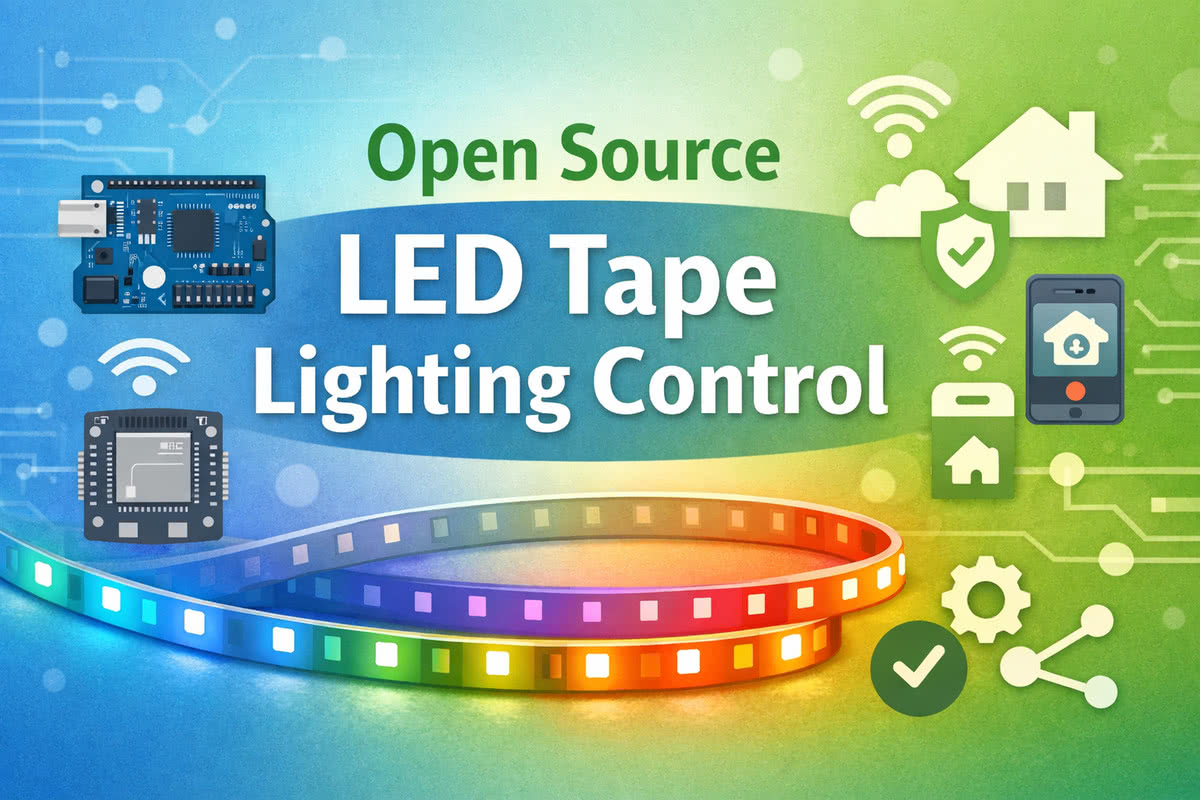
This intersection between open source programming and manufacturing expertise is where innovation truly happens.
Why LED Tape Lights Are Popular in Open Source Projects
LED tape lights are flexible, low-voltage, and easy to integrate. They can be cut, extended, programmed, and synchronized with music, sensors, or web-based triggers. This versatility makes them ideal for:
- Smart home projects
- Interactive art installations
- Ambient gaming setups
- DIY health and sleep lighting systems
- Educational electronics kits
Developers can combine microcontrollers like Arduino or ESP32 with open source libraries to create dynamic lighting systems without building hardware from scratch.
However, stable control begins with consistent hardware supplied by a reliable LED tape light manufacturer.
Popular Open Source Libraries for Controlling LED Tape Lights
Several widely used open source libraries help developers control addressable and non-addressable LED strips.
1. FastLED
FastLED is one of the most powerful and flexible libraries for controlling addressable LEDs such as WS2812 and APA102. It supports complex animations, color palettes, and advanced timing control.
Key features:
- High-performance rendering
- Color correction tools
- Multiple chipset support
- Cross-platform compatibility
FastLED allows precise RGB manipulation and is widely used in artistic installations and DIY smart lighting systems.
2. Adafruit NeoPixel Library
Developed by Adafruit, this beginner-friendly library simplifies control of WS2812-type addressable LEDs.
Benefits include:
- Easy-to-understand API
- Strong documentation
- Large community support
It is ideal for hobbyists starting their first LED tape programming project.
3. WLED
WLED is an open source firmware that runs on ESP8266 and ESP32 boards. It enables WiFi-based control of LED strips without deep programming knowledge.
Features include:
- Web interface control
- App integration
- Home Assistant compatibility
- Real-time effects and presets
WLED bridges the gap between DIY projects and consumer-ready smart lighting products.
When paired with high-quality LED tape provided by a professional LED tape light manufacturer, WLED can power reliable residential or commercial installations.
4. OpenRGB
OpenRGB is designed to unify RGB lighting control across devices. It supports PC-based synchronization and is widely used in gaming setups.
For developers creating synchronized lighting ecosystems, OpenRGB provides cross-device coordination and customizable profiles.
Hardware Considerations for Open Source Projects
Open source code can only perform as well as the hardware allows. Developers often encounter issues such as:
- Voltage drop across long strips
- Color inconsistency
- Overheating
- Signal degradation
These problems are frequently caused by low-quality PCB materials, poor soldering, or unstable LED binning.
A professional LED tape light manufacturer addresses these issues through:
- Adequate PCB copper thickness
- Precise resistor configuration
- Stable IC sourcing
- Consistent LED bin control
- Thorough aging tests
For open source developers building commercial-ready prototypes, choosing reliable hardware ensures fewer debugging headaches.
Addressable vs. Non-Addressable Strips in Development
Open source lighting projects typically use two types of LED tape:
Addressable strips
Each LED can be controlled individually. Ideal for animations, dynamic effects, and interactive systems.
Non-addressable strips
Entire sections change color simultaneously. Suitable for ambient lighting or simple dimming control.
A capable LED tape light manufacturer can supply both types with customization options including voltage (5V, 12V, 24V), LED density, waterproof ratings, and PCB width.
For larger installations, 12V or 24V systems reduce voltage drop and improve stability—important for developers scaling projects beyond small prototypes.
Integrating LED Tape Lights with IoT Platforms
Open source ecosystems often connect lighting systems with:
- Home Assistant
- MQTT brokers
- Node-RED
- Raspberry Pi environments
This integration enables automation such as:
- Circadian rhythm lighting schedules
- Sensor-triggered illumination
- Energy-saving shutdown routines
- Remote cloud-based control
When working on IoT deployments, stable signal transmission and consistent voltage become critical. Hardware inconsistency can cause flickering or data corruption.
Manufacturers like DeKingLED understand that developers and smart lighting brands require stable PCB construction and reliable chip sourcing to support programmable applications. Consistency at the manufacturing level enables flexibility at the software level.
Thermal Management in Continuous Operation
Open source lighting installations often run continuously for extended periods—especially in smart homes or commercial environments.
Without proper thermal design, LED strips can experience:
- Brightness degradation
- Color shifts
- Premature failure
Professional LED tape light manufacturers optimize heat dissipation through material selection and circuit balancing. For developers aiming to commercialize their projects, this reliability is essential.
From Open Source Prototype to Market Product
Many successful smart lighting brands began as open source experiments. A developer builds a prototype using FastLED or WLED, gains community attention, and eventually launches a product line.
Transitioning from prototype to mass production requires:
- Consistent component sourcing
- Regulatory compliance support
- Stable batch production
- Scalable manufacturing capacity
At this stage, collaboration with a professional LED tape light manufacturer becomes crucial. The hardware must match the sophistication of the software.
Open source communities provide the creativity. Manufacturers provide the physical foundation.
Where Code Meets Craftsmanship
Open source development empowers innovation in LED lighting control. Libraries simplify animation, synchronization, and smart integration. Developers can turn ideas into working systems with remarkable speed.
Yet behind every stable lighting effect lies precision manufacturing. Reliable PCBs, consistent LEDs, proper thermal management, and disciplined quality control transform code into dependable illumination.
When software freedom meets hardware expertise, the result is not just blinking lights—but scalable, intelligent lighting systems ready for the next generation of connected environments.