3 ways open source is reshaping supply chains
If you rewind 15 or 20 years, supply chains were mostly talked about in terms of physical movement. Ships, trucks, warehouses, ports. The conversation was all logistics and infrastructure. That still matters, obviously, but the interesting shift lately is how much of the problem has become digital.
Companies today don’t necessarily struggle to move products. What they struggle with is understanding what’s happening across their own networks. One supplier changes something upstream, a port delay happens somewhere else, and suddenly the whole system ripples.
Software, particularly open-source infrastructure, has started to change that dynamic in ways that people outside the industry don’t always notice. It’s giving companies the ability to see their supply chains more clearly and react faster when things move sideways.
You can see this even in the way companies are rethinking where they manufacture. Improved digital visibility has helped drive interest in things like nearshoring between U.S. and Mexico, where production moves closer to end markets to reduce risk and shorten delivery cycles. That kind of shift is much easier to manage when the underlying logistics systems are supported by modern data platforms.
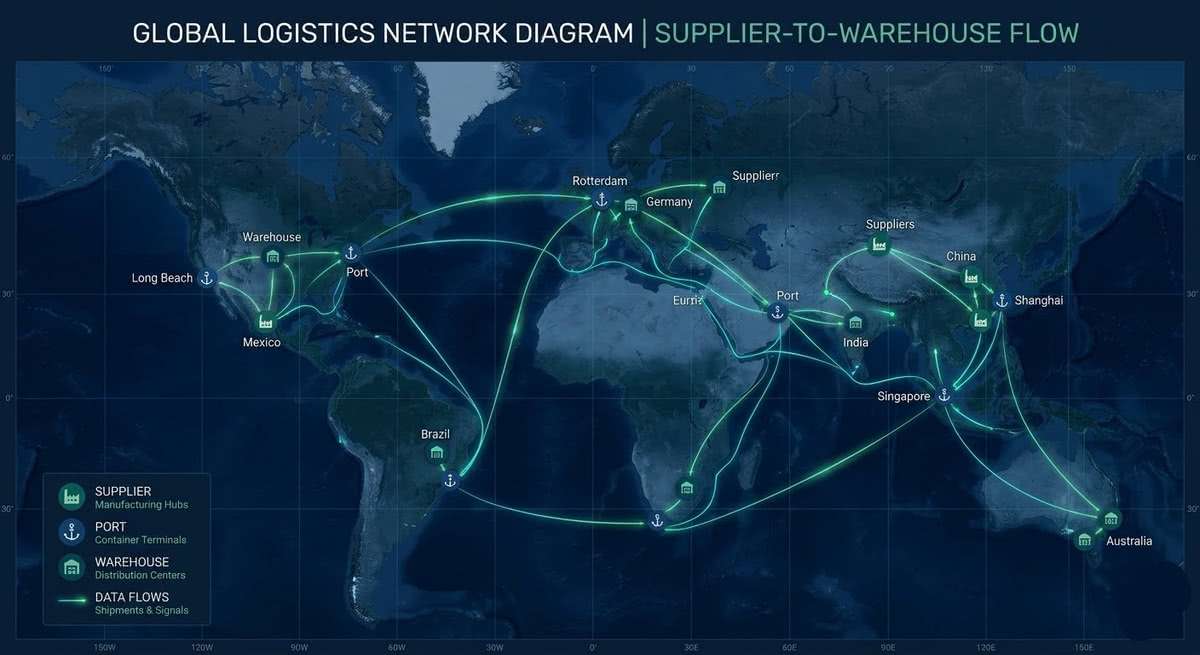
1. Open data is making supply chains less opaque
One of the long-standing problems with global supply chains is that nobody really sees the whole thing.
A manufacturer might know its direct suppliers, sure. But beyond that? It gets fuzzy. Tier-two suppliers, raw material providers, subcontractors scattered across different countries… information tends to fragment quickly.
Open data tools are slowly improving that situation.
Instead of every company running its own isolated system, open standards and API-based platforms allow data to move more freely between organizations. Inventory levels, shipment tracking, and production forecasts can be shared across partners without everyone needing identical software.
That’s part of why governments have been paying more attention to supply chain transparency lately. In fact, U.S. policy research has highlighted the importance of better supply chain data for identifying vulnerabilities and strengthening logistics networks.
The key point is simple: once companies can actually see their supply chain in detail, they start making smarter decisions about it.
2. Open-source analytics helps companies prepare for disruption
Visibility is helpful, but it doesn’t solve the problem by itself.
What really matters is how companies interpret that data. That’s where open-source analytics tools have quietly become important. Data science libraries, distributed computing frameworks, and cloud-native infrastructure have made it far easier to analyze logistics information at scale.
Imagine a company importing components from several different regions. With the right analytics setup, they can model what happens if one port closes, or if shipping times suddenly double. They can test alternative suppliers or transportation routes before those problems occur in the real world.
This kind of modeling is becoming more common because modern supply chains are complicated. Businesses today face a wide mix of risks, from transportation delays to political shifts to simple inventory miscalculations. Studies looking at the challenges faced by modern logistics systems point to how fragile global production networks can be when information is incomplete or slow.
Better analytics doesn’t eliminate those risks. But it gives companies a much better shot at anticipating them.
3. Collaboration is becoming a core part of supply chain software
Something else interesting has been happening alongside all of this.
Supply chain technology used to be dominated by closed, proprietary systems. Big enterprise platforms that required everyone in the network to adopt the same tools. That approach worked… sort of. But it also made collaboration difficult.
Open-source ecosystems are changing that mindset.
Developers working on logistics infrastructure now tend to build systems that integrate easily with others. Shared APIs, modular services, and open frameworks allow different organizations to connect their systems without replacing everything they already have.
That’s important because modern supply chains are essentially networks of networks. A manufacturer might interact with dozens of suppliers, multiple freight companies, regional distributors, and retailers. The software supporting those relationships needs to be flexible.
Even something as mundane as maintaining reliable digital infrastructure matters here. Stable systems, good monitoring, and practices that support network stability all contribute to keeping logistics data flowing between partners.
It’s not glamorous work. But without it, the digital side of supply chains falls apart pretty quickly.
The bigger picture is that supply chains are slowly becoming software-defined systems. Trucks and ships still move the goods, of course, but the decisions behind those movements increasingly come from data platforms, analytics engines, and collaborative tools built by developers.
Open-source technology isn’t the only factor shaping that shift, but it’s playing a surprisingly large role in making global logistics a little more transparent, a little more adaptable, and, in some cases, a lot smarter.