



Advertisement
Overview
Godot was created by Argentine developers Juan Linietsky and Ariel Manzur, who used it internally for several years for their own game and client projects before open-sourcing it in 2014 under the MIT license. The name “Godot” was chosen partly as a reference to Samuel Beckett’s play “Waiting for Godot,” reflecting the developers’ long wait to be able to release the engine publicly.
Interest in Godot grew significantly following Unity’s 2023 controversy over a proposed per-install runtime fee, which pushed many developers to evaluate alternatives with no licensing costs or usage-based fees. Godot is developed by a large community of contributors and the non-profit Godot Foundation, with funding coming from donations, corporate sponsorships (including support from Epic Games’ MegaGrants program in earlier years), and Software Freedom Conservancy fiscal sponsorship.
Key Features
- Node and scene system — Games are built from a tree of nodes and reusable scenes rather than a strict component/entity model
- GDScript — A Python-like scripting language designed specifically for Godot, alongside support for C# and GDExtension for other languages
- Unified 2D and 3D workflows — Dedicated, purpose-built editors and renderers for both 2D and 3D projects
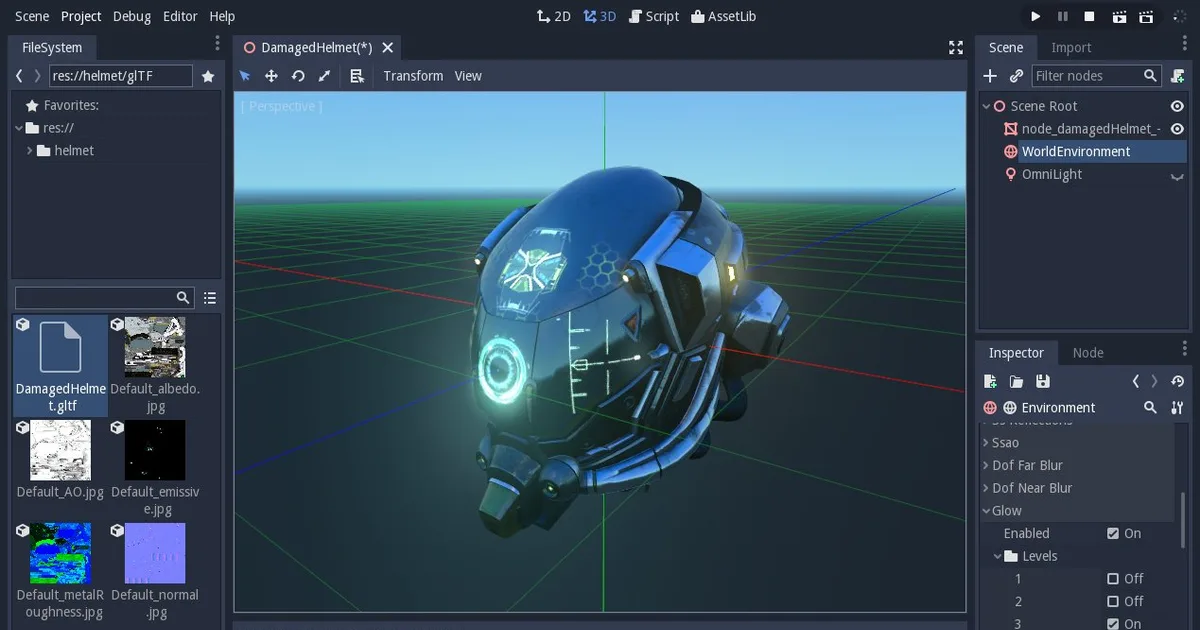
- Built-in editor — A full scene editor, animation editor, shader editor, and tilemap tools included with no separate install
- No royalties or revenue share — MIT license with no per-seat, per-install, or revenue-based fees
- Export templates — Export to desktop, mobile, web (via WebAssembly), and console platforms (with third-party console export support)
Use Cases
- Indie game development — 2D and 3D games from solo developers and small teams
- Game jams — Popular for rapid prototyping due to fast iteration and a lightweight editor
- Education — Used in schools and workshops for teaching game development without licensing concerns
- Tool and pipeline scripting — GDExtension and GDScript used to build custom in-editor tools
Who It’s For
Godot is aimed at indie developers, hobbyists, and educators who want a fully free and open source engine without royalties, revenue thresholds, or per-seat licensing. Its lighter-weight editor and MIT license make it a common choice for developers moving away from proprietary engines, though larger 3D productions may still find its renderer and tooling less mature than commercial competitors.
Advertisement