Luxury interior design that reflects personality
Luxury homes are no longer defined by extravagant decoration or recognizable designer labels. The modern concept of premium living has evolved toward spaces that express individuality, support everyday routines, and create a genuine sense of comfort. Today’s homeowners increasingly value interiors that feel authentic rather than simply impressive.
A well-designed residence should become a natural extension of its owner. Every room, material, and architectural detail has the potential to improve daily life by responding to personal habits, emotional preferences, and functional needs. In this sense, true luxury is measured not by appearance alone but by the experience of living within the space.
Luxury has become personal
Modern luxury emphasizes individuality instead of excess. Successful interior design begins with understanding the people who will live in the home rather than following temporary design fashions.
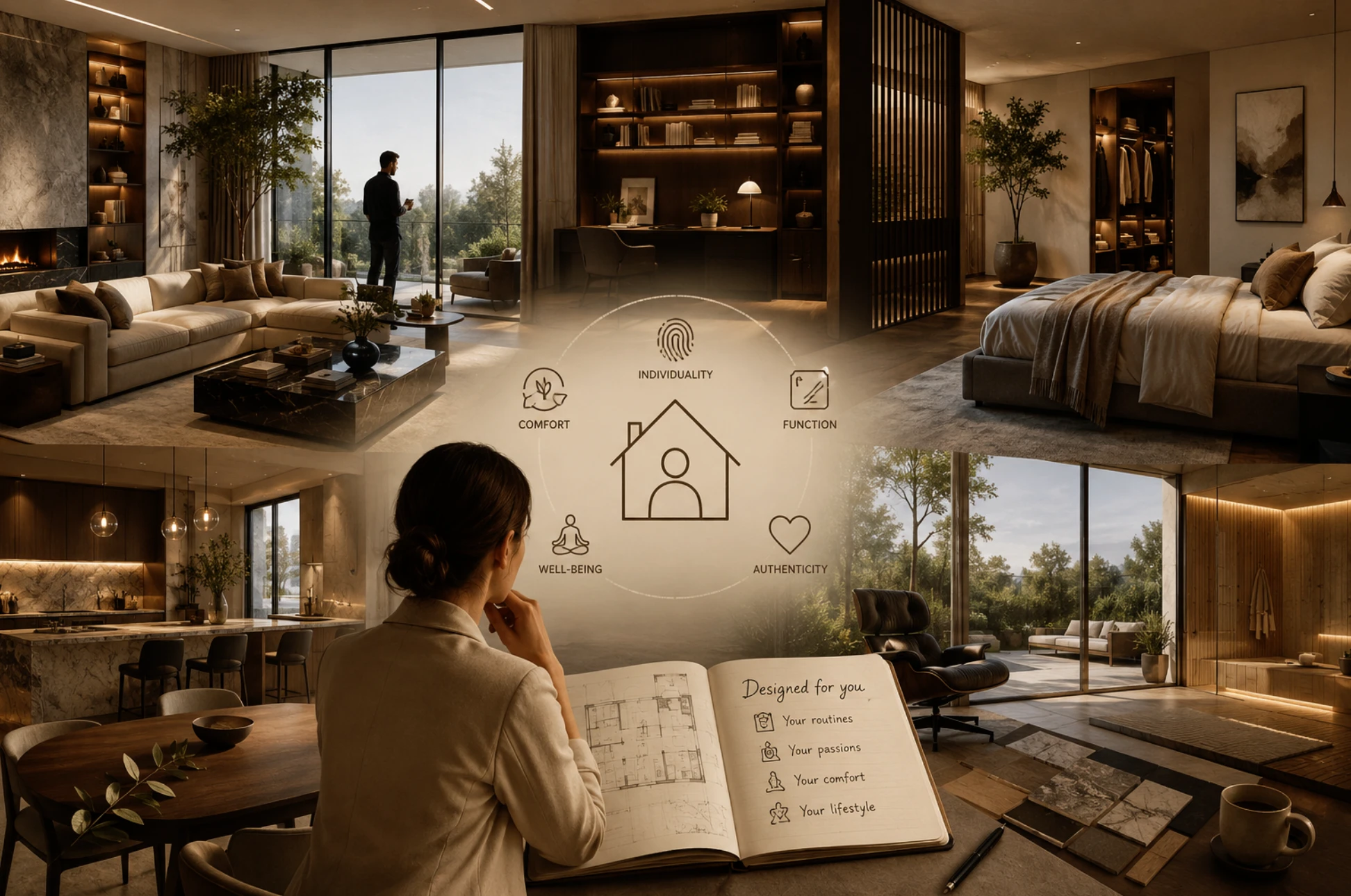
When an interior fails to reflect its owner’s lifestyle, even the most expensive finishes may feel uncomfortable over time. In contrast, spaces designed around personal routines naturally encourage relaxation, concentration, and emotional balance.
Designing with human behavior in mind
Exceptional residential architecture combines aesthetics with an understanding of how people interact with their surroundings. Lighting, circulation, acoustics, proportions, and material choices all influence mood and behavior. Experienced professionals specializing in residential interior design often begin each project by learning how their clients live before developing any floor plans or selecting finishes.
Questions extend far beyond visual preferences. Designers examine everyday routines, favorite activities, work habits, family dynamics, and relaxation rituals. These observations become the foundation of every architectural decision.
Creating spaces around everyday life
A personalized residence is organized according to real-life activities rather than decorative trends. Common planning considerations include:
- Comfortable mornings. Bedrooms, bathrooms, and kitchens are arranged to create a calm and intuitive start to the day through natural light and efficient circulation.
- Private work areas. Quiet rooms with thoughtful acoustics and minimal visual distractions improve productivity for remote work, reading, or creative projects.
- Entertaining guests. Kitchens, dining rooms, lounges, and outdoor terraces are connected to encourage comfortable movement and conversation during gatherings.
- Evening relaxation. Adjustable lighting, warm textures, wellness amenities, and peaceful surroundings help separate work from personal time.
Bespoke design instead of standard solutions
Personalized interiors rarely rely on mass-produced furniture or generic layouts. Custom cabinetry, integrated storage, made-to-measure furnishings, and individually selected materials ensure that every component serves both practical and aesthetic purposes.
“Every luxury home should tell the story of its owner rather than the designer,” says Tetiana Oliinyk, founder of OLT DESIGN. “Understanding personal routines, preferences, and long-term goals allows us to create interiors that remain meaningful for many years instead of following short-lived trends.”
The creative process usually begins with detailed conversations, inspiration boards, and conceptual visualization. These early stages help translate abstract ideas and emotions into architectural solutions tailored specifically to each client.
Timeless materials that improve with age
Unlike rapidly changing design trends, carefully selected natural materials continue to gain character over time. Durable finishes reduce the need for frequent renovations while preserving the home’s visual integrity for decades.
Materials that define lasting luxury
- Natural stone. Marble, quartzite, limestone, and travertine provide distinctive textures and lasting durability.
- Premium hardwoods. Oak, walnut, and ash introduce warmth, improve acoustics, and create visual depth throughout the home.
- Architectural metals. Bronze, brushed brass, stainless steel, and blackened metal accents contribute understated elegance without overwhelming the interior.
- Natural fabrics. Linen, wool, silk, leather, and textured upholstery create comfort while adding visual richness.
The value of expert craftsmanship
One of the defining characteristics of high-end residential design is meticulous craftsmanship. Individually produced furniture, handcrafted lighting, custom millwork, and carefully fabricated stone elements give each residence a unique identity that cannot be achieved through factory-made products.
Attention to detail transforms an interior from a collection of beautiful objects into a cohesive architectural environment built to last for generations.
Turnkey interior design with international standards
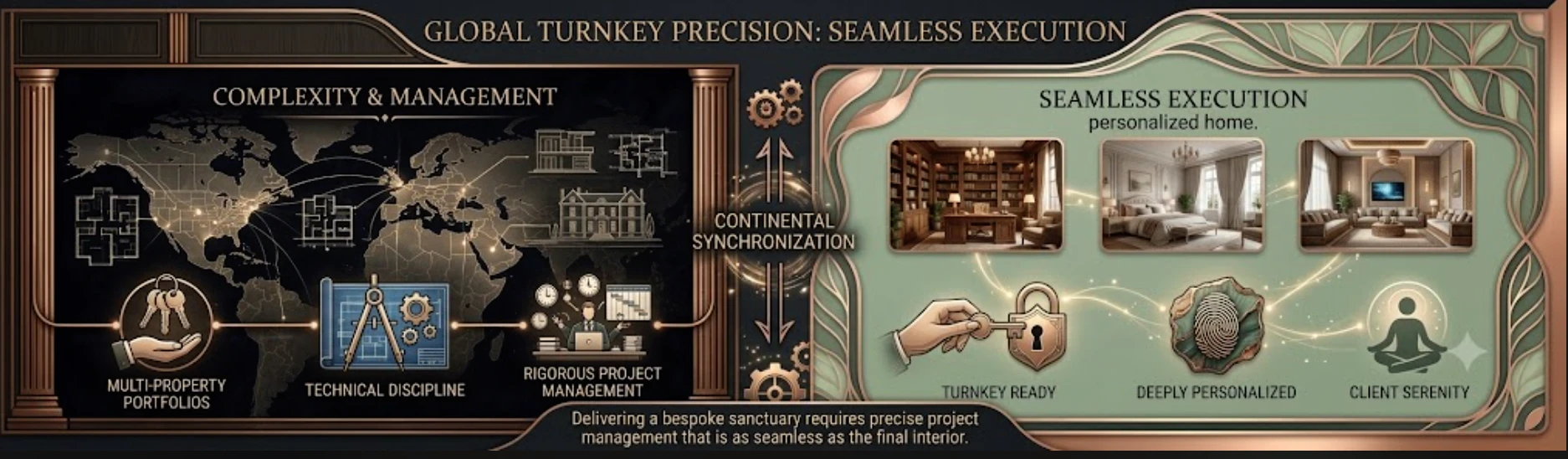
Managing luxury residential projects across different countries requires detailed planning, transparent communication, and strict quality control throughout every phase of construction and installation.
Key stages of a full-service project
- Initial consultation. Understanding the client’s vision, priorities, and lifestyle requirements.
- Space planning. Developing architectural layouts, circulation patterns, lighting concepts, and technical drawings.
- Material selection. Choosing finishes, furniture, fabrics, fixtures, and custom-made elements while coordinating suppliers.
- Technical documentation. Preparing construction drawings and engineering documentation for accurate implementation.
- Project supervision. Monitoring construction, installation, and finishing work to ensure complete compliance with the approved design.
A carefully managed turnkey process allows homeowners to remain confident that every stage of the project will be executed according to the original vision, regardless of location.
A home that supports everyday living
The finest luxury interiors do more than showcase exceptional design — they improve the quality of daily life. By combining thoughtful architecture, timeless materials, personalized planning, and skilled craftsmanship, designers create homes that offer lasting comfort, emotional well-being, and functional beauty. When every decision is guided by the people who will inhabit the space, luxury becomes something deeply personal rather than merely decorative.
Comments
Comments are loaded when you choose to open them, which keeps the page faster and lighter.