NixOS

NixOS is a free and open source Linux distribution built around the Nix package manager. Unlike traditional Linux distributions, NixOS uses a declarative configuration model. Users define the entire system state in configuration files, making it straightforward to reproduce the same setup across multiple machines.
Atomic Upgrades and Reliable Rollbacks
One of the biggest advantages of NixOS is its reliability. System upgrades are atomic — updates either complete successfully or leave the current system unchanged. Every system generation is stored separately, so users can roll back instantly if an update or configuration change causes problems. This makes NixOS well suited for production servers and workstations where stability matters.
Who Uses NixOS?
NixOS is popular among developers, system administrators, and advanced Linux users. It is widely used for development workstations, servers, containers, and reproducible build environments. The distribution supports modern workflows including Nix flakes, containers, virtualization, and infrastructure-as-code. Teams working on complex software projects often choose NixOS for its reproducibility guarantees.
Desktop Environment Options
NixOS does not ship with a single default desktop environment. Users can choose from GNOME, KDE Plasma, Xfce, Cinnamon, and MATE. COSMIC, the new desktop from System76, is also available and reached beta status in the NixOS 25.11 release cycle. This flexibility makes NixOS suitable for both lightweight systems and full-featured desktop computers.
Release Model
NixOS follows a hybrid release model. Stable releases come out every six months — near the end of May and November — and receive security and bug-fix updates throughout their support window. The rolling nixos-unstable branch provides access to the latest packages and desktop environments for users who want cutting-edge software.
Software Availability
NixOS includes access to one of the largest software collections in Linux through the Nixpkgs repository, which contains over 100,000 packages. Packages are installed in isolated paths in the Nix store, which means multiple versions of the same application can coexist without conflicts. Users can also install packages in their own profile without needing root privileges.
Getting Started
NixOS has a steeper learning curve than distributions such as Ubuntu or Linux Mint. New users will need time to learn the Nix language and understand how declarative configuration works. The official NixOS manual is the best place to start. The NixOS community is active and helpful for newcomers.
Home Manager is a widely used companion tool that extends the declarative approach to user-level configuration, managing dotfiles and user packages in the same reproducible way. It is one of the most searched topics in the NixOS ecosystem and well worth exploring after the basics.
Frequently Asked Questions
Is NixOS good for beginners? NixOS is not the easiest starting point for Linux newcomers. Users who are already comfortable with the command line and want full control over their system will get the most from it. Most beginners are better served by Ubuntu, Fedora, or Linux Mint first.
Can I run NixOS as a daily driver desktop? Yes. NixOS supports GNOME, KDE Plasma, and other desktop environments out of the box. Many developers use it as a daily driver and value the ability to declare their entire desktop configuration in a single file.
What is the difference between NixOS stable and nixos-unstable? The stable channel receives a curated snapshot of Nixpkgs twice a year and gets security backports. The nixos-unstable channel tracks the latest Nixpkgs commits and is updated continuously. Unstable gives access to newer software but is less tested than the stable releases.
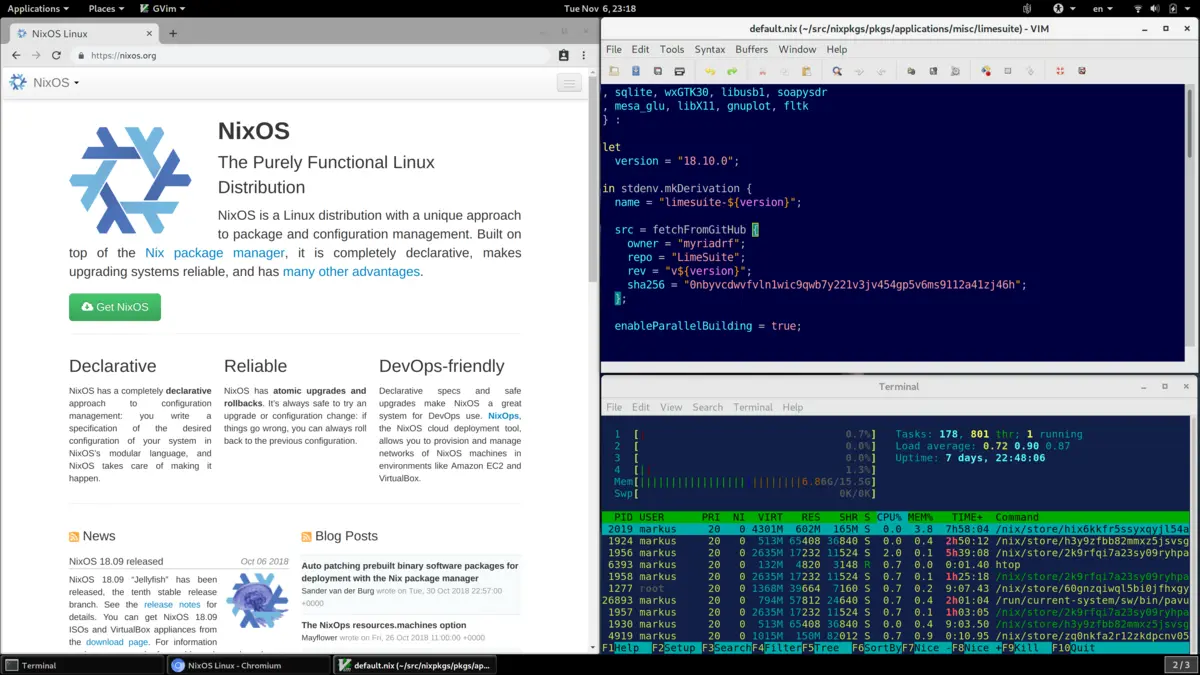 NixOS desktop with declarative configuration in a terminal
 | Type | Linux |
| Status | Active |
| Home Page | https://nixos.org |
| Page popularity | 16(15 hits per month) |
| Base distributions |
|
| Desktop Environments | |
| Releases |
What do you think about NixOS?