Why open source projects choose lightweight analytics
If you run an open source project website, there’s a good chance you’ve wrestled with the same uncomfortable question: do you really need Google Analytics tracking your visitors, or is there something better suited to the open source ethos? More developers are asking that question — and the answer is reshaping how independent sites handle traffic data.
The Problem With Traditional Analytics
Most mainstream analytics platforms were built for marketing teams, not open source maintainers. They come loaded with features most small sites will never use, and they carry a compliance cost that’s easy to underestimate.
GDPR Consent Headaches
Under GDPR’s cookie guidelines, analytics cookies that track individual users require explicit opt-in consent before they fire. For a small open source project, that means implementing a cookie banner, managing consent states, and hoping visitors actually click “Accept.” Most don’t. You end up with consent rates around 30–50%, which means your analytics data is already incomplete before you’ve even looked at it.
Performance and Trust
Beyond compliance, there’s a values mismatch. Open source communities tend to distrust opaque data collection — the same reason many users install ad blockers. Dropping a heavyweight third-party tracking script on your project page can feel at odds with the transparency your community expects. And those scripts add real page weight: Google Analytics alone can add 45KB+ to every page load.
Tools Built for Minimal Footprint
The good news is that a growing ecosystem of lightweight analytics tools has matured significantly. They range from self-hosted open source options to zero-setup hosted services, and most of them work without cookies at all.
Self-Hosted Open Source Options
Tools like Umami, GoatCounter, and Matomo let you own your data completely. GoatCounter in particular has become popular in the open source community — it’s free for personal use, open source itself, and stores no personal data. Matomo is the most feature-complete self-hosted option and offers full GDPR compliance when configured correctly. The tradeoff is that you need a server to run them, which adds operational overhead for smaller projects.
Zero-Setup Services
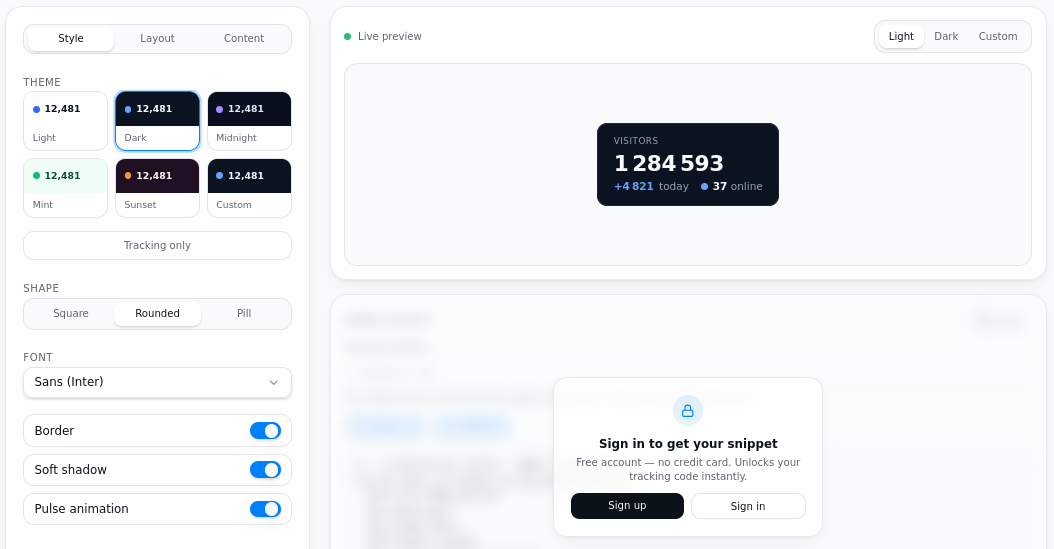
For projects that just need a headcount, even a basic hit counter can do the job. Services like[e-zeeinternet.com have been around since the early 2000s and take a deliberately minimal approach — a small script, no cookies, and a free tier. No setup complexity, no data ownership concerns. You can Go to the new e-zeeinternet.com to learn more about this service. You may also find similar lightweight tools reviewed alongside other open-source software alternatives that the community has been adopting.
Frequently Asked Questions
Do I need analytics at all for an open source project site?
Not necessarily. Many projects run perfectly well without traffic data. If you’re curious about reach but not optimizing for conversions, a simple hit counter or a basic self-hosted tool is usually sufficient.
Are cookie-free analytics actually GDPR compliant?
Generally yes — if the tool doesn’t track individuals across sessions and stores only aggregated data, it typically falls outside the scope of GDPR’s consent requirements. Always check the specific tool’s documentation to confirm.
How does GoatCounter compare to Matomo?
GoatCounter is simpler and easier to self-host, but lacks Matomo’s depth. Matomo gives you funnel tracking, heatmaps, and detailed session data. GoatCounter gives you page views and referrers — nothing more.
Can I use multiple lightweight tools at once?
You can, but it’s rarely worth it. Two minimal tools usually means double the maintenance for marginally better data. Pick the one that covers your actual use case and stick with it.
What about server-side logging instead of JavaScript analytics?
Server logs are an underrated option — no client-side script, no consent requirement, and complete data. Tools like GoAccess can parse Apache/Nginx logs into readable dashboards. The downside is they can’t distinguish bots from real visitors without additional filtering.
Conclusion
The shift toward minimal analytics isn’t just a privacy trend — it’s a recognition that most open source project sites don’t need the complexity of enterprise tracking tools. Whether you go self-hosted with Umami or GoatCounter, or opt for a lightweight hosted service, the right tool is usually the simplest one that answers your actual question. For most projects, that question is just: “Is anyone out there?” A lightweight counter is more than enough to answer it.
Comments
Comments are loaded when you choose to open them, which keeps the page faster and lighter.